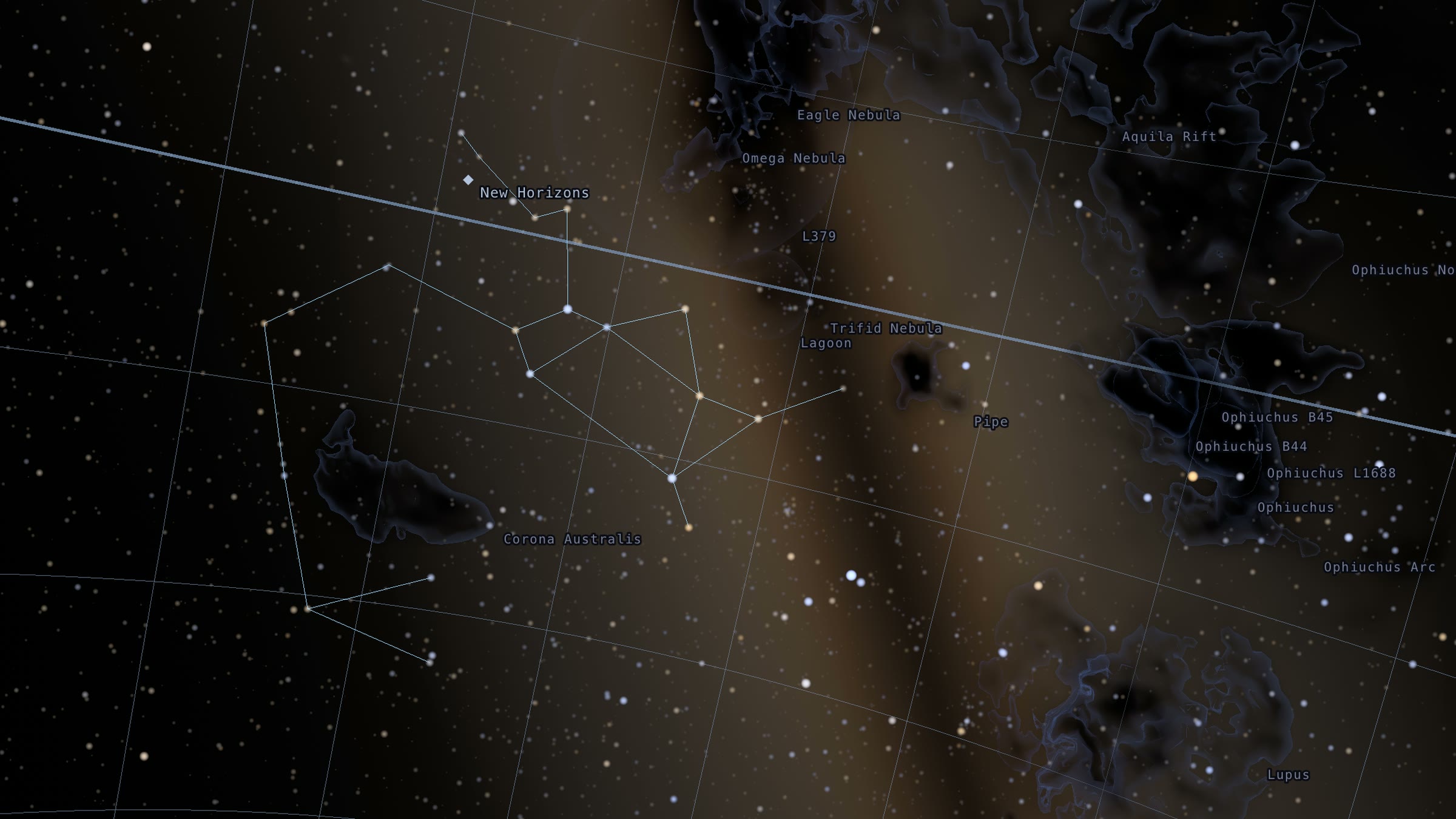
Stellata is a physics-based, empirical 3D model of our galaxy that simulates what it would be like to actually be there. — real stars, the planets of our Solar System, the Sun's heliopause, local interstellar dust, and the Milky Way backdrop: every object comes from a published observational catalogue or direct measurement.
Drag to orbit, scroll to zoom, and hover for more information. Click a star to focus it, click a second star to measure the distance between them, and click the far end to travel there. Search “Sol” to come home, and press ? for keyboard shortcuts.
Explore and you'll find variable and multiple star systems, all represented as if you were actually there. Try observing the sky from a focused star, pull up sky charts, or warp between the stars.
Stellata is an observational 3D model of our local part of the galaxy at every scale we've measured it. From individual stars and their planets, through the local interstellar medium, out to the structure of the galactic disc. Every object in Stellata comes from databases of direct, empirical measurement. Theoretical predictions and conjectured structures are excluded. The goal of Stellata is to continue to build observational data into the model as we continue to expand our knowledge of our galactic home.
Each star is rendered at the colour and apparent brightness you would actually see from any given point in space, including the effects of dust extinction and reddening through the interstellar medium. Known variable stars pulsate at their catalogue period. When focused on Sol, the eight planets and Pluto render at their heliocentric positions for the current wall-clock time, with faint orbit rings shown for reference. The heliopause is represented as an asymmetric shell at ~122 AU upwind, ~200 AU into the heliotail.
~313,000 stars come from the AT-HYG v3.3 catalogue, cross-matched with the GCVS variable-star catalogue and the Hipparcos CCDM list of visual binaries. Planet positions come from JPL Standish 1992 Keplerian elements, and heliopause sizing derives from Voyager 1 & 2 and IBEX measurements. The Milky Way's volumetric backdrop is drawn from published density profiles. See the Credits tab for the full list and more details.
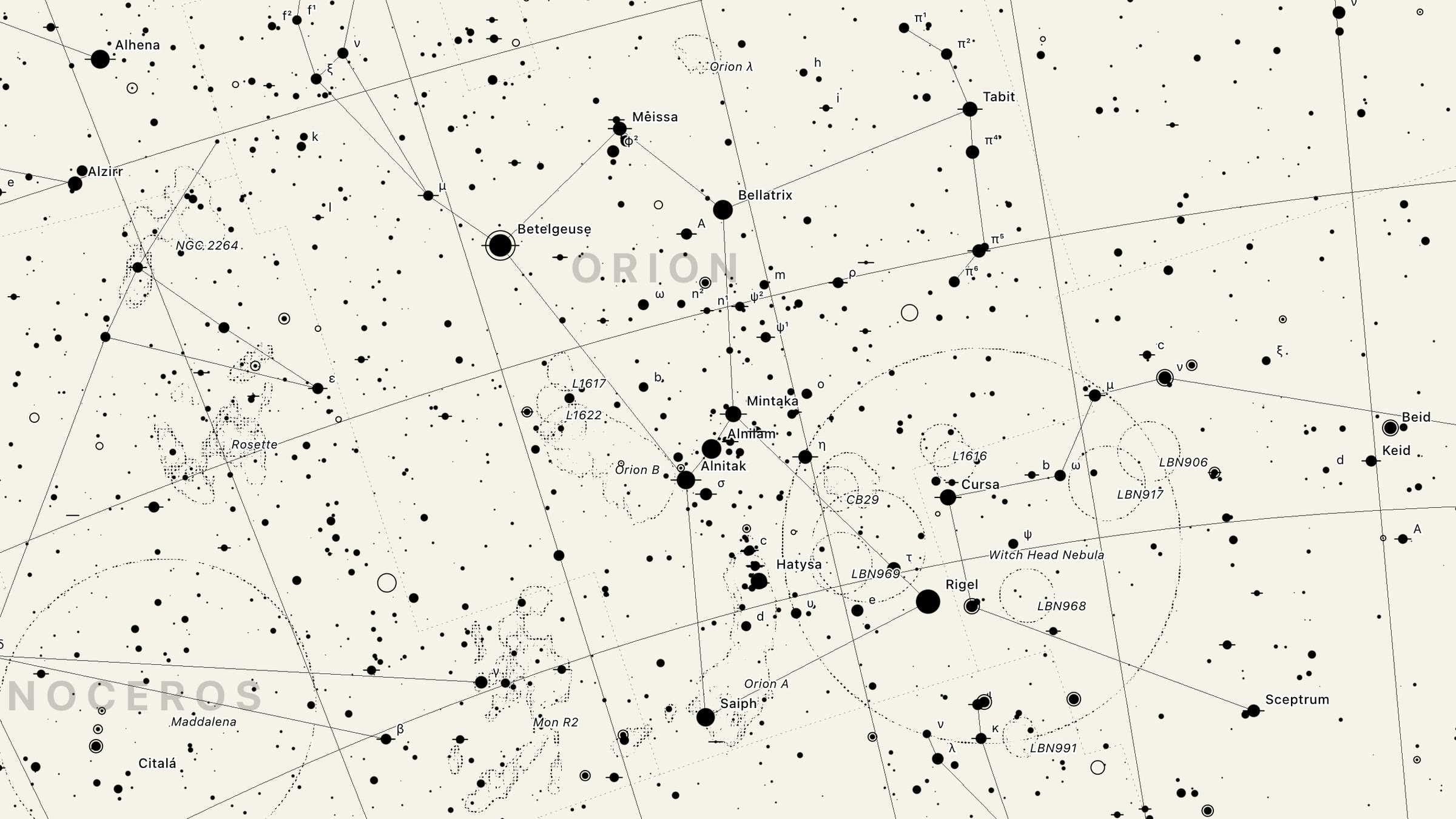
There are two camera modes: Navigate orbits, zooms, and warps between stars; Observe parks the camera's vantage point at the focused star and lets you look around. Press M while observing to switch to a Sky Atlas–style monochrome chart with proper name and Bayer labels. Press ? for the full keyboard reference.
Created by Alex Marshall and released under AGPL-3.0.
Stellata is built on a stack of real astronomical data. Every catalogue and dataset used to render the scene is listed below.
Full citations and modelling notes live in SCIENCE.md in the source repository.